
What Stage Is Your Business In? Why That Answer Changes Everything
Most businesses don't stall from lack of effort. They stall because they're using the wrong strategy for their stage.
I see this constantly with growth-stage founders. They're working hard, harder than ever, and still feel stuck. Revenue might even be climbing. But something feels harder than it should, and they can't quite name what's wrong.
Almost every time, the answer is the same: what worked to get the business here isn't what's needed to take it to the next level. And nobody has stopped to update the strategy.
Why this happens.
As a business grows, its financial and operational needs change. But the instinct is usually to keep doing more of what already worked. More hustle. More gut-instinct decisions. More of the scrappy, do-everything-yourself approach that got the business off the ground.
That approach is exactly right in the early stages. It's exactly wrong once a business hits real complexity, multiple locations, growing headcount, tighter margins, bigger decisions with bigger consequences. What was once a strength quietly becomes the ceiling.
The Stage Method.
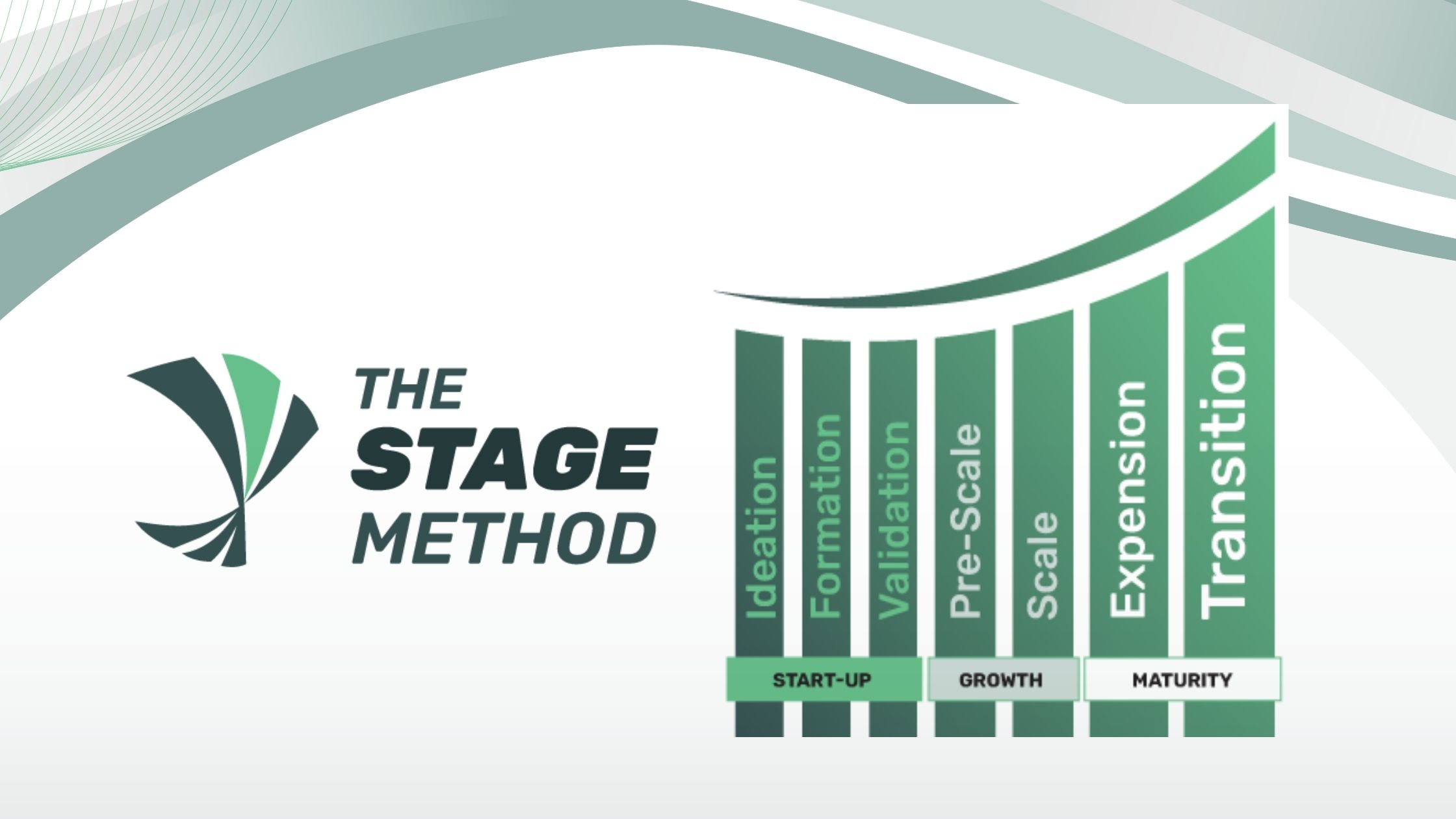
This is why we built the Stage Method: a framework for identifying where a business actually is, right now, and what it needs next. It breaks growth into seven stages across three broader phases.
Start-Up: Ideation, Formation, and Validation — generating and refining the idea, setting up the legal and operational basics, and testing the offer in the market.
Growth: Pre-Scale and Scale — fine-tuning operations and expanding the customer base, then expanding market presence and revenue in earnest.
Maturity: Expansion and Transition — exploring new markets or products, and eventually planning an exit, restructuring, or leadership shift.
The stage that matters isn't the one you started in or the one you aspire to. It's the one your business is actually operating in today, and that's usually identified by where things feel harder than they should.
The mistake growth-stage founders make most often.
Founders often copy what bigger, more mature companies are doing — the reporting cadence, the org structure, the strategic initiatives, but without the financial infrastructure to support it. Or the opposite happens: a business scales past its Start-Up habits but keeps making decisions on gut instinct instead of data, because that instinct has always worked before.
Both mistakes come from the same root cause: solving the wrong problem for your current stage.
What this looked like for one of our clients.
An industrial service business was presented with an opportunity to acquire their largest competitor, a company roughly twice their size. The opportunity was significant, but it also introduced real financial risk, and their existing systems weren't built for a decision at that scale.
We worked with them to build a financial plan that made the acquisition feasible. After the deal closed, the focus shifted to execution. Cash flow got tight, and maintaining consistent monthly profitability became critical. With accurate, real-time reporting and forecasting in place, they were able to monitor performance closely, catch issues early, and plan ahead for future cash constraints.
The result: they successfully acquired a larger competitor, became a regional market leader, and saw 64% revenue growth and 331% profit growth year over year. None of that was possible with the financial structure that had gotten them through their earlier stages, it required stepping into the infrastructure their new stage demanded.
How to identify your own stage.
Ask yourself a few honest questions: Is revenue growing but margins and profitability unclear? Are financial decisions still being made on gut instinct rather than data? Are you managing multiple locations, departments, or revenue streams without real-time visibility into performance? If several of these sound familiar, you're likely in the Pre-Scale or Scale stage, and the priority isn't more hustle, it's building the systems that let you see and manage growth clearly.
Common questions.
Can a business be in more than one stage at once? Often, yes. Different parts of the business can be at different stages. But there's usually one dominant stage causing the most friction, and that's the one worth addressing first.
What happens if I address the wrong stage's priorities? Effort gets spread too thin, and the resources go toward solving problems the business doesn't actually have yet, while the real bottleneck stays unresolved.
Where to go from here?
Knowing your stage is only the first step. The Stage Method gives you the specific financial priorities that move you to the next one, not generic advice, but the exact next move for where your business actually is. You can download our free Stage Method document HERE to see where you actually are.